
From the 30 Sensex companies, Zomato, Tata Motors, IndusInd Bank, Asian Paints, Bajaj Finance, Maruti Suzuki India, Adani Ports, Hindustan Unilever, Reliance Industries, Bajaj Finserv, UltraTech Cement and Infosys were among the laggards. In contrast, State Bank of India, ICICI Bank, Tata Steel, NTPC, Tata Consultancy Services, PowerGrid, Kotak Mahindra Bank and Sun Pharmaceuticals were the gainers.

From the Sensex pack, Asian Paints, NTPC, Reliance Industries, Tata Steel, Bajaj Finserv, Hindustan Unilever, Sun Pharmaceuticals, Adani Ports & SEZ, Axis Bank, Tata Consultancy Services, Titan and Bajaj Finance were the major gainers. Tech Mahindra, Kotak Mahindra Bank, Zomato, Tata Motors, and IndusInd Bank were the laggards.

Bankers said the outlook of M&As in India in 2024, especially in the second half after the Lok Sabha election, seems relatively better.

Investor confidence in value mutual funds remains robust, with the category witnessing an inflow of Rs 1,556 crore in January, indicating a shift in their focus towards fundamentally strong yet undervalued stocks.

From the Sensex pack, Nestle India, HCL Technologies, Tech Mahindra, Bharti Airtel, Titan, Infosys, Asian Paints, NTPC, Bajaj Finserv and Sun Pharmaceuticals were among the laggards. State Bank of India, IndusInd Bank, Zomato, Power Grid, ICICI Bank, Tata Motors, Mahindra & Mahindra, Tata Consultancy Services and Adani Ports were the gainers.

Institutional investments in Indian real estate have seen a strong start to 2025, with inflows reaching $ 1.3 billion in the first quarter - a 31 per cent year-on-year (YoY) increase. This growth was primarily driven by domestic investments, which accounted for 60 per cent of the total inflows during the quarter. With $ 0.8 billion inflows, domestic investments saw a 75 per cent annual rise and were largely focused on industrial & warehousing and office segments.

The country's biggest carmaker, Maruti Suzuki India, has raised concerns about the continuing slide in small car sales.

Bajaj Finance, IndusInd Bank, State Bank of India, Maruti, Tata Motors, ITC, Tata Steel and Reliance Industries were also among the gainers. Nestle, NTPC, Kotak Mahindra Bank, Power Grid and Titan were among the laggards.

From the 30-share blue-chip pack, Tata Motors, Reliance Industries, ICICI Bank, Asian Paints, Nestle India, UltraTech Cement, Larsen & Toubro and Adani Ports were among the biggest gainers. In contrast, Zomato, HCL Tech, Tata Consultancy Services, Tech Mahindra, Kotak Mahindra Bank and Infosys were among the losers.

Passenger vehicle dispatches in India from factories to dealers rose to record levels at over 43 lakh units in FY25, with utility vehicles accounting for 65 per cent of the total sales in the segment, industry body SIAM said on Tuesday. Passenger vehicle (PV) dispatches rose to 43,01,848 units in the last fiscal year, marking a 2 per cent increase compared to 42,18,750 units in FY 2023-24.
Zomato emerged as the biggest gainer, followed by Reliance, Nestle, Asian Paints and Power Grid.

In an eventful week ahead, stock markets may face volatile trends before the RBI's interest rate decision and the US inflation data announcements, as investors continue to assess the broader implications of US tariffs on global economy and inflation, analysts said. Investors fear that a full-blown trade war will impact global trade and economic growth, according to market experts.

Brokerages expect a further slowdown in Indian firms' revenue and earnings growth in Q4FY25, following low single-digit growth in the preceding three quarters, as factors like weak consumer demand and credit growth linger on.

Bajaj Finance, ICICI Bank, Bajaj Finserv, IndusInd Bank, Infosys, Kotak Mahindra Bank, Wipro, and Reliance Industries were among the other laggards. On the other hand, Larsen & Toubro, Hindustan Unilever, Power Grid, Asian Paints, Nestle and Mahindra & Mahindra were the major gainers.

If Beijing succeeds in this multipronged effort to challenge the current dominant power, it will have not just economic but political and security consequences. There is no let-up in the South China Sea nor any de-escalation moves on the India-China border. This portends to ominous signalling from Beijing, observes China expert Srikanth Kondapalli.

'We were the best team in Asia at one point. Today, we are barely in the reckoning for the Davis Cup.' 'Players now, especially this decade, lack perseverance.'

Wholesale price inflation dropped to 0.85 per cent in April as prices of food articles, manufactured products, and fuel eased, government data showed on Wednesday. WPI-based inflation was 2.05 per cent in March. It was 1.19 per cent in April last year.

Tata Motors on Wednesday reported a 22 per cent fall in consolidated net profit to Rs 5,578 crore for the third quarter ended December 2024, impacted by s decline in revenue from its passenger and commercial vehicles divisions. The company had posted a consolidated net profit of Rs 7,145 crore in the same quarter last fiscal, Tata Motors said in a regulatory filing.

From the Sensex pack, UltraTech Cement, Infosys, Bajaj Finserv, Axis Bank, HDFC Bank, Bharti Airtel, HCL Tech and Tata Consultancy Services were the biggest gainers. Zomato tanked nearly 6 per cent followed by IndusInd Bank which declined about 5 per cent. Adani Ports, Mahindra & Mahindra, Reliance Industries and Sun Pharma were also among the laggards.

On a five-day rolling basis, FPI selling is the highest in 24 years.

Indian equity benchmarks rose nearly 2 per cent on Thursday, capping a truncated trading week with their strongest weekly performance in over four years. The rally was sparked by renewed risk-on sentiment following progress in trade negotiations and expanded tariff exemptions.

Strong margins in the jewellery segment in Q4FY25, steady growth guidance for FY26 and expectations of outperformance in the organised jewellery sector boosted sentiment for the largest listed jewellery maker by market capitalisation, Titan Company. The stock was the highest gainer on the benchmark indices (Sensex as well as Nifty), rising 4.1-4.5 per cent at close on Friday, taking the total gains over the past month to about 12 per cent.

The January-March quarter (Q4) results for 2024-25 (FY25) from the country's largest passenger vehicle (PV) maker, Maruti Suzuki India (MSIL), were a mixed bag, with revenues broadly in line but operating profit missing Street expectations. Given cost pressures, margins at the operating level were the lowest in the past seven quarters.

Fresh formal job creation cooled for the second consecutive month to decline to a six-month low in September, signalling a downturn in the labour markets this financial year. The number of new monthly subscribers under the Employees' Provident Fund (EPF) declined by 6.45 per cent to 891,583 in September from 953,092 in August, shows the latest payroll data released by the Employees' Provident Fund Organisation (EPFO). Besides, the net payroll additions -- calculated by taking into account the number of new subscribers, the number of exits, and the return of old subscribers -- increased by 14.9 per cent to 1.72 million in September from 1.49 million in August.

Shares of Reliance Industries as well as Bharti Airtel began the trade on a positive note on Wednesday after the two firms announced their partnerships with Elon Musk's SpaceX for providing high-speed internet services in India. Bharti Airtel stock opened with a gain of 5.49 pc to hit a high of Rs 1,388.25 apiece on the National Stock Exchange (NSE). Soon, it pared all gains and traded 0.77 per cent lower to Rs 1,650.10 per piece.

The decline has been mainly on account of a fall in manufacturing, the output of which contracted by 3.3 per cent during March. The sector, which accounts for almost 80 per cent of the index, registered an increase of 5.7 per cent during the same month in 2008.

'If the US stagnates and falls into a recession, the dollar will weaken, oil prices will also dip. This augurs well for India.'

Top executives from Siam and major carmakers recently met with Heavy Industries Secretary Kamran Rizvi to discuss the matter. Officials from NITI Aayog were also present.

The Indian automobile retail sector saw a strong start to 2025, with overall sales increasing by 6.6 per cent year-on-year (YoY) in January, according to the latest report by the Federation of Automobile Dealers Associations (FADA). Despite the positive numbers, the association noted that auto dealers have mixed expectations for the coming months. Nearly half (46 per cent) anticipate further growth in sales, while 43 per cent believe sales will remain steady.

In January, SIP account closures surpassed new registrations for the first time.

Farm workers and drivers will figure among the fastest growing jobs over the next five years, while roles of cashiers and ticket clerks will see the largest decline, a new study showed on Wednesday. In its Future of Jobs Report 2025, the World Economic Forum (WEF) also said that 170 million new jobs will be created by 2030, while 92 million are projected to be displaced, resulting in 78 million net new jobs.

Wholesale price inflation eased to 2.05 per cent in March, as against 2.38 per cent in February, government data showed on Tuesday. The wholesale price index (WPI) based inflation, however, rose year-on-year.

India's industrial production growth slowed to 3.8 per cent in December 2023, mainly due to poor performance of mining and power generation segments, according to official data released on Monday. The factory output growth measured in terms of the Index of Industrial Production (IIP) was at 5.1 per cent in December 2022. In November last year, IIP growth stood at 2.4 per cent.
The Centre for Monitoring Indian Economy on Tuesday said industrial production growth is likely to decline in the second half of the current fiscal, while the first advanced estimate of kharif crop showed a 10 per cent drop in food production.\n\n\n\n

US strikes on Iran's three main nuclear facilities have once again raised concerns that Tehran might shut down the Strait of Hormuz - one of the world's most critical chokepoints, through which a fifth of global oil and gas supply flows.

Food delivery aggregator Swiggy saw its loss widen for the fourth quarter (January-March) of financial year 2024-25 (Q4FY25). The firm reported a consolidated loss of Rs 1,081.1 crore for the quarter, compared to a loss of Rs 554.7 crore in the corresponding quarter of FY24.

From the Sensex firms, Wipro, NTPC, Sun Pharma, Mahindra & Mahindra, ITC and Reliance Industries were among the biggest laggards. IndusInd Bank, Axis Bank, Bajaj Finance, HDFC Bank, Larsen & Toubro and State Bank of India were among the major gainers.

When Gensol Engineering made its public market debut through a small and medium enterprises (SME) initial public offering (IPO) in September 2019, its promoters held a commanding 96 per cent stake. Now, that figure has shrunk to a "negligible" fraction.
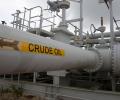
Indian imports of Russian oil plunged by a record in August month-on-month (M-o-M) as discounts on the fuel shrank in tandem with rising Brent oil prices. Higher crude prices will drive inflation or hurt earnings at oil companies and India's fiscal position if such spikes are not passed on to consumers. Indian purchases of Russian crude declined by around 24 per cent in August from July to the lowest level since January, with refiners expecting volumes to drop further amid rising rates of Russian benchmark Urals grade, substantial stocks at refiners, and planned maintenance at Indian refineries, according to ship tracking data and industry officials.

Equity mutual funds (MFs) capped a strong 2024 with near-record inflows in December. With net inflows of Rs 41,156 crore in December, the 2024 tally surged to Rs 3.9 trillion, up 144 per cent compared to 2023. The December tally, which was only slightly short of the record-high inflows of Rs 41,887 crore achieved in October 2024, was fuelled by record inflows of Rs 9,761 crore into small-cap and mid-cap funds.
